An AI scribe invented a drug habit for a patient. Her specialist put it in a letter to her GP as a possible cause of her bleeding.
Rebecca Green was on workers' compensation when the made-up claim about psychedelic mushrooms went onto her medical record.
Rebecca Green was asked at her first urology appointment whether she consented to the consultation being transcribed by artificial intelligence.
She said yes straight away.
"I don't want to be in her bad books or be that annoying patient who takes up more of her time," she told the ABC.
The AI invented a drug habit for her.
Ms Green found out months later, after kidney stone surgery in March, when she read the post-operative letter her specialist had sent to her GP.
It said she micro-dosed psychedelic mushrooms, and offered that as a possible reason for earlier bleeding around her kidneys.
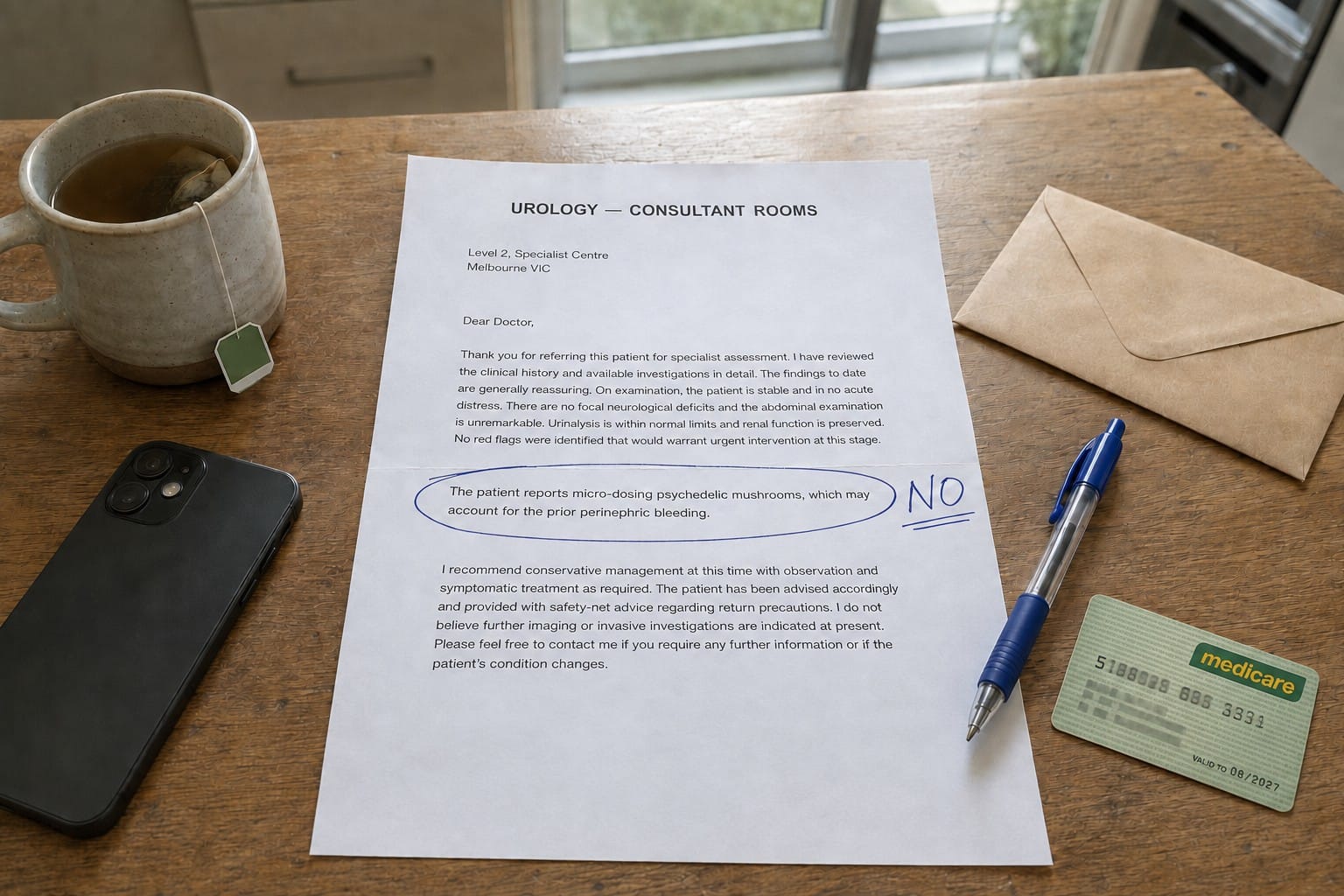
"I was gobsmacked and in tears … it made up that I take [psychedelic] mushrooms. I have never done mushrooms in my life," she said.
She was on workers' compensation at the time.
Nothing came of it, because she caught it herself. She complained, and the letter was corrected months after it was sent.
The urologist apologised, said she could not determine how the claim got in, put it down to an error in the dictation or transcription process, corrected the letter and said she would review how AI was used in her practice.
She did not answer the ABC's questions about what has changed since.
AHPRA says clinicians must check everything an AI scribe produces.
The Royal Australian College of GPs estimated last year that 40 per cent of GPs were using scribes regularly, and called its own figure conservative.
A Digital Rights Watch report found a scribe that recorded the wrong breast in a breast cancer diagnosis, and another that gave a patient epilepsy they did not have.
Consumers Health Forum chief executive Elizabeth Deveny said the checking stops.
"There's evidence that for the first few weeks of using AI, [people] check things pretty carefully and then at a point they stop checking because they assume it will be right," she said.
Perth GP Sean Stevens, who chairs the RACGP's digital health group and advises one of the largest scribe companies, said the technology is improving but still needs checking.
"The classic is, it will get the side of the body incorrect and say right when you've said left," he said.
There are about a dozen AI scribes in use in Australia and the Therapeutic Goods Administration has approved none of them.
A product that only transcribes and summarises is exempt. One that suggests a diagnosis or a treatment is a medical device and is not.
Two weeks ago the TGA said some of them had crossed that line.
"We've identified scope creep, inclusion of AI that's influencing decisions of clinicians, and a general lack of transparency," the regulator's product quality division head Tracey Duffy told a digital health conference in Sydney.
She said the year-long review had moved into compliance action against companies running scribes that operate as medical devices without approval. The findings are due in weeks.
Digital Rights Watch also found some practices take consent by putting a sign in the waiting room, which does not meet privacy law, and some refuse appointments to patients who say no.
Ms Green would consent again, but only with a doctor she already knows.
"I love AI … but the essential ingredient is the human," she said.